It’s nearly impossible to have a marketing conversation in 2026 without AI entering the discussion.
But amid all the conversation about what AI can do for marketers, one critical part of the equation can get overlooked: the humans we’re marketing to.
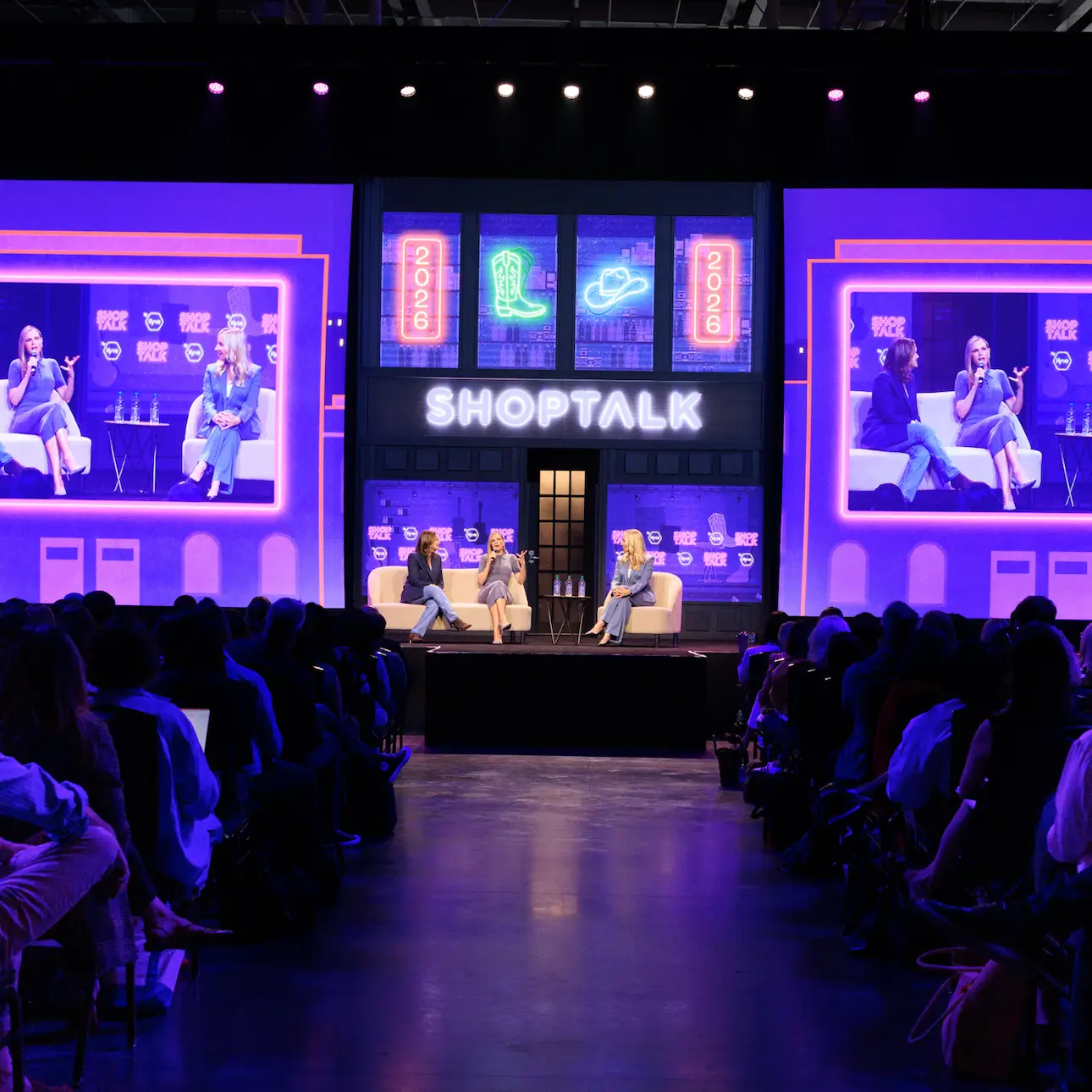
Our team attended eTail Boston, where there was no shortage of discussion around AI and everything that comes with it. Despite all the focus on what’s next, many of those conversations kept circling back to the consumer, not just how to reach them, but how to make their experience more personal, connected, and genuinely valuable.
As brands and marketers push forward with AI and optimization, some of the companies standing out are doubling down on something far more foundational: putting the customer first.
Across conversations about personalization, AI, and customer experience, the common thread was that technology works best when it puts the customer first. Here are the key takeaways we brought back from eTail Boston 2026:
More AI Doesn’t Have to Mean Less Human Connection
“Technology should eliminate friction, not emotion.”
That perspective from Lisa Horton, Chief Communications & Creative Officer at David’s Bridal, cuts through a question retailers are increasingly trying to answer: As more of the customer journey becomes automated, what should remain distinctly human?
For David’s Bridal, the distinction is especially important. Technology can remove stress from an already complicated wedding journey, but it shouldn’t automate away the emotional experience that comes with it. Even Pearl, the company’s AI chatbot, is trained around the language of its in-store DreamMakers, bringing an element of the human experience into an automated interaction.
That same intentionality is showing up across other retailers. Warby Parker’s Sandy Gilsenan explained how the company is using AI behind the scenes to streamline store operations and give associates more face-to-face time with customers, while online tools like Virtual Try-On and a personalized Advisor aim to recreate some of that in-store experience.
Lovepop is taking a similar approach to customer service. Co-Founder & COO John Wise explained how technology gives “Happiness teams” more context around each customer, from what they bought to how they typically shop. That context can help employees understand the occasion or sentiment behind a purchase and deliver more personal service.
The technology available to brands and marketers is becoming more sophisticated by the day, but just because they have it at their fingertips doesn’t mean it belongs in every customer interaction. The differentiating factor will be knowing where AI can make the customer experience better and, just as importantly, where it doesn’t belong.
Personalization Is Getting Smarter, but Brands Need to Know Its Limits
AI is giving retailers more context about individual customers than ever before, making personalization increasingly sophisticated. At eTail Boston, Target SVP of Technology Brad Thompson described it as a major part of the retailer’s next growth chapter, including the potential to configure PDPs around individual behavior, like prioritizing video for someone who regularly engages with it.
But more personalization doesn’t automatically mean a better experience. Jason Shapiro, GM of eCommerce at Michaels, explained how the retailer inherited significant customer data through the acquisition of JOANN but recognized that having the data didn’t mean it had inherited the customer’s trust. The company has been deliberate about building that trust before leaning into deeper personalization.
There’s also a point where relevance can become restrictive. Shapiro noted that only showing a customer the type of yarn they typically buy could eliminate the discovery they come to Michaels for in the first place. Wayfair CMO Paul Toms raised a similar challenge with furniture, explaining there is no universally perfect sofa. The right recommendation requires understanding the customer’s space, budget, style, and needs, not simply what they clicked on last.
The insight for brands is simple: personalize where it adds value, not simply because the data allows it. Knowing where to draw that line will separate useful personalization from personalization that gets in the customer’s way.
The Customer Journey Needs Connection, Not Just More Optimization
Carolyn Altomare, SVP of Digital Sales at RRD, made the point that every touchpoint can perform exactly as intended while the overall customer experience still feels disconnected. As she put it, “Competence is no longer a competitive advantage. Coherence is a competitive advantage.”
AI makes that distinction even more important. Brands can create more content, messages, and interactions faster than ever, but the answer isn’t necessarily another touchpoint. It’s making the next one smarter because of what came before it.
Wayfair is taking that connected journey beyond digital. After 23 years as an e-commerce brand, the retailer opened its first brick-and-mortar store in 2024, adding a real-world touchpoint that gives customers the physical experience online shopping can’t always provide. Instead of treating physical and digital as separate, Wayfair is using each to strengthen the overall experience.
Coherence matters on the path to discovery, too. Sourabh Sharma, Head of Marketing at Histoires de Parfums, noted that Gen Z doesn’t separate social, search, and community, with creators and comment sections increasingly shaping how they discover and validate products.
Retailers can’t optimize these interactions in isolation. The goal is to make every touchpoint build on the last, creating one connected experience where customers feel supported throughout the entire path to purchase.
What to Bring Back to Your Team
As AI creates more ways to optimize the customer journey, the opportunity is to make sure those advancements are actually improving it. If you couldn’t make the show, three priorities stood out at eTail Boston:
- Start With the Experience
Use AI where it removes obstacles or adds real value, not simply because the capability exists. Some interactions are still better left human.
- Personalize With Purpose
More data doesn’t always mean a better experience. Use it to create relevance without sacrificing trust, discovery, or choice.
- Build for Cohesion
As customer touchpoints continue to multiply, look beyond individual moments and build a cohesive brand experience that connects the customer before, during, and after a purchase.
Retail may be entering its most technologically advanced era yet, but eTail Boston made one thing clear: the customer still comes first. The companies that stand out won’t necessarily use the most AI. They’ll know where it makes the experience better and where the human touch still wins.